Buying clothes made from recycled synthetic fibres can give the impression of doing something for the environment. And it's true: recycling fibres from PET bottles, fishing nets or even old textiles reduces the extraction of new resources... but this solution also has its limits and a price.
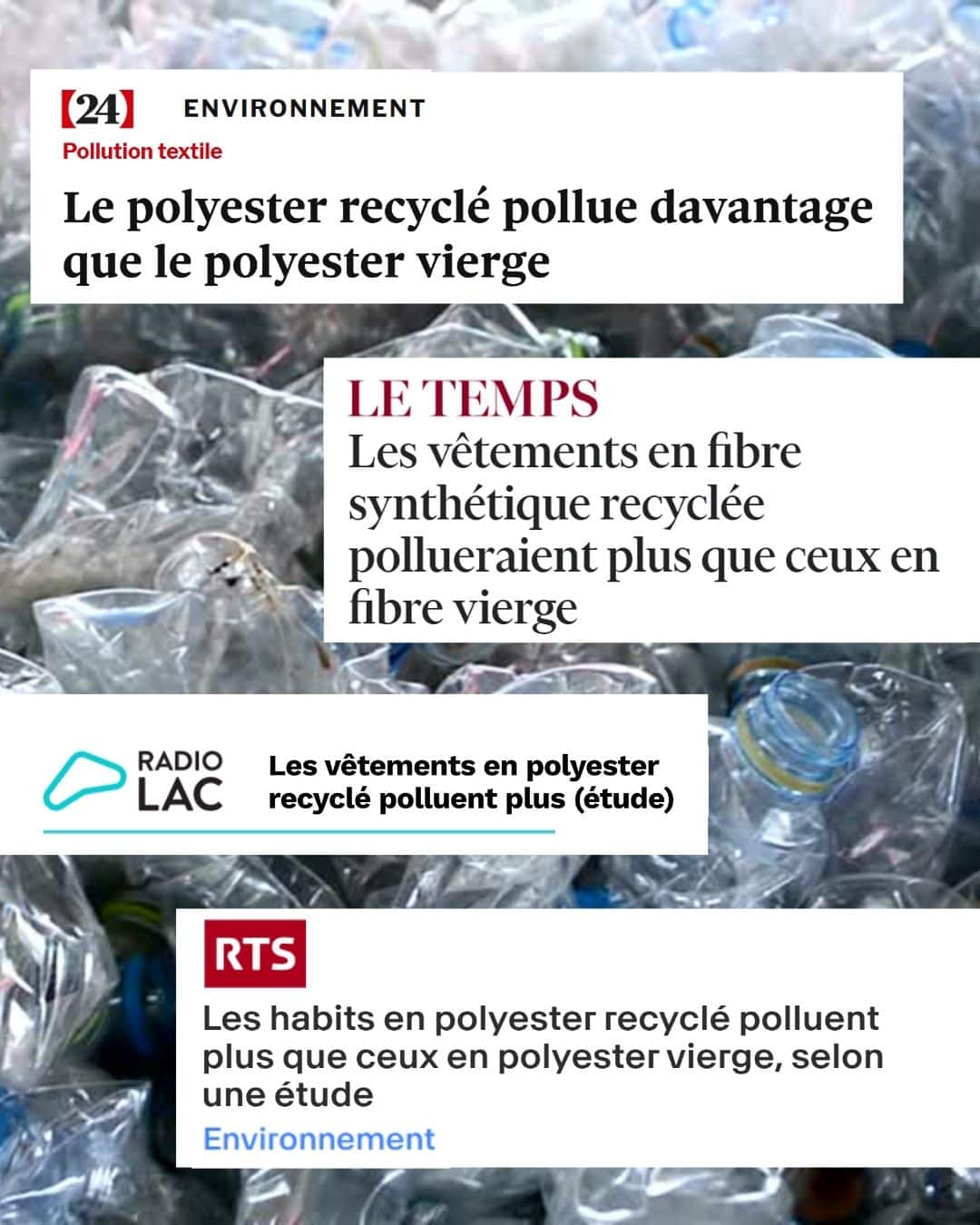
Research carried out at Çukurova University in Turkey, published by the NGO Changing Markets, shows that clothes made from recycled synthetic fibres release more microplastics during washing: up to 55 % more than virgin polyester, with particles 20 % smaller, so easier to disperse in the environment. A single wash cycle can release up to 900,000 fibres into the water.
These particles are now ubiquitous in oceans, seas and lakes. Lake Geneva is also affected. In 2024, the Pla'stock¹ study confirmed this massive pollution by revealing that 63% of the plastic particles found on beaches came from the textile industry, i.e. almost 4,800 fibres/m2.
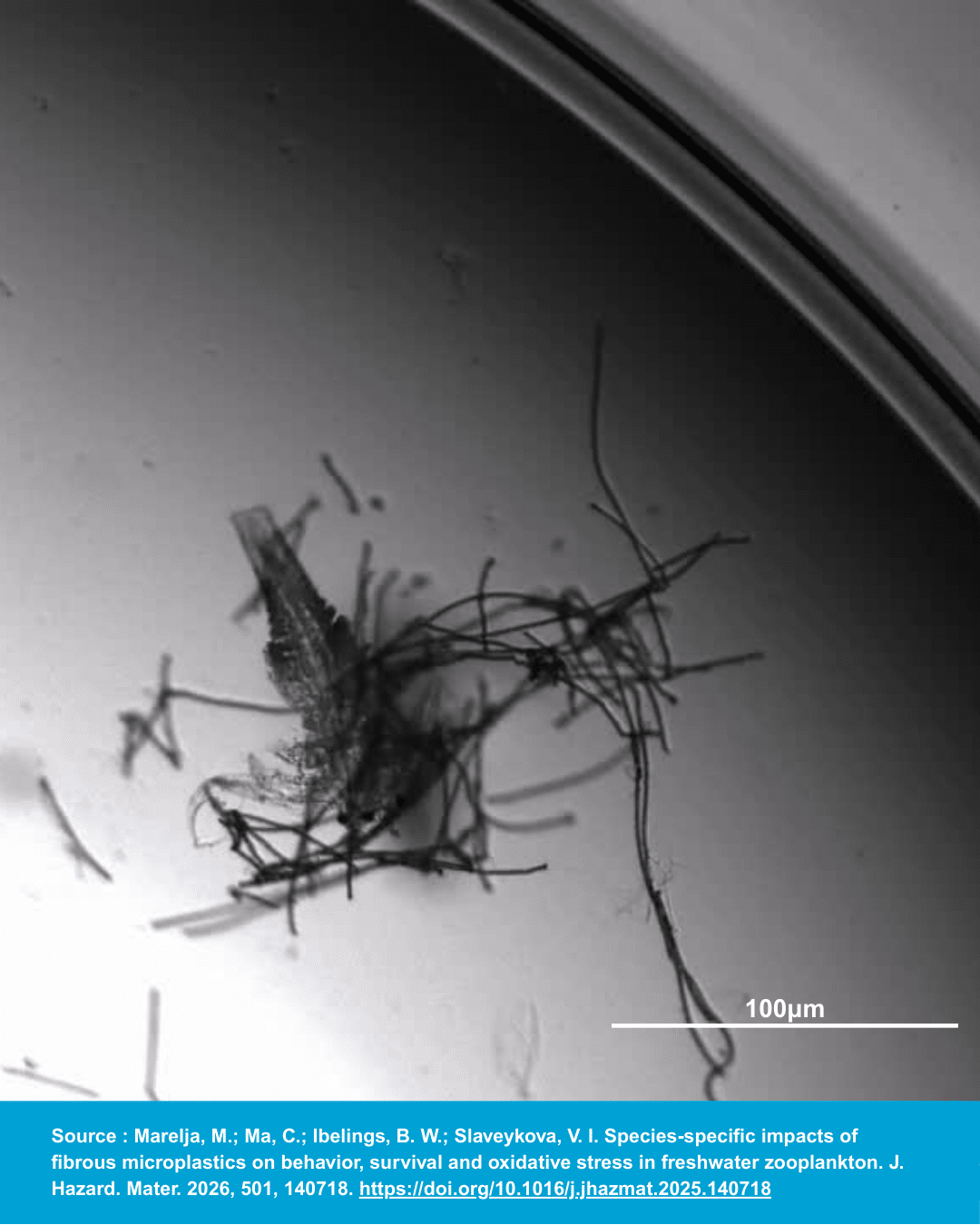
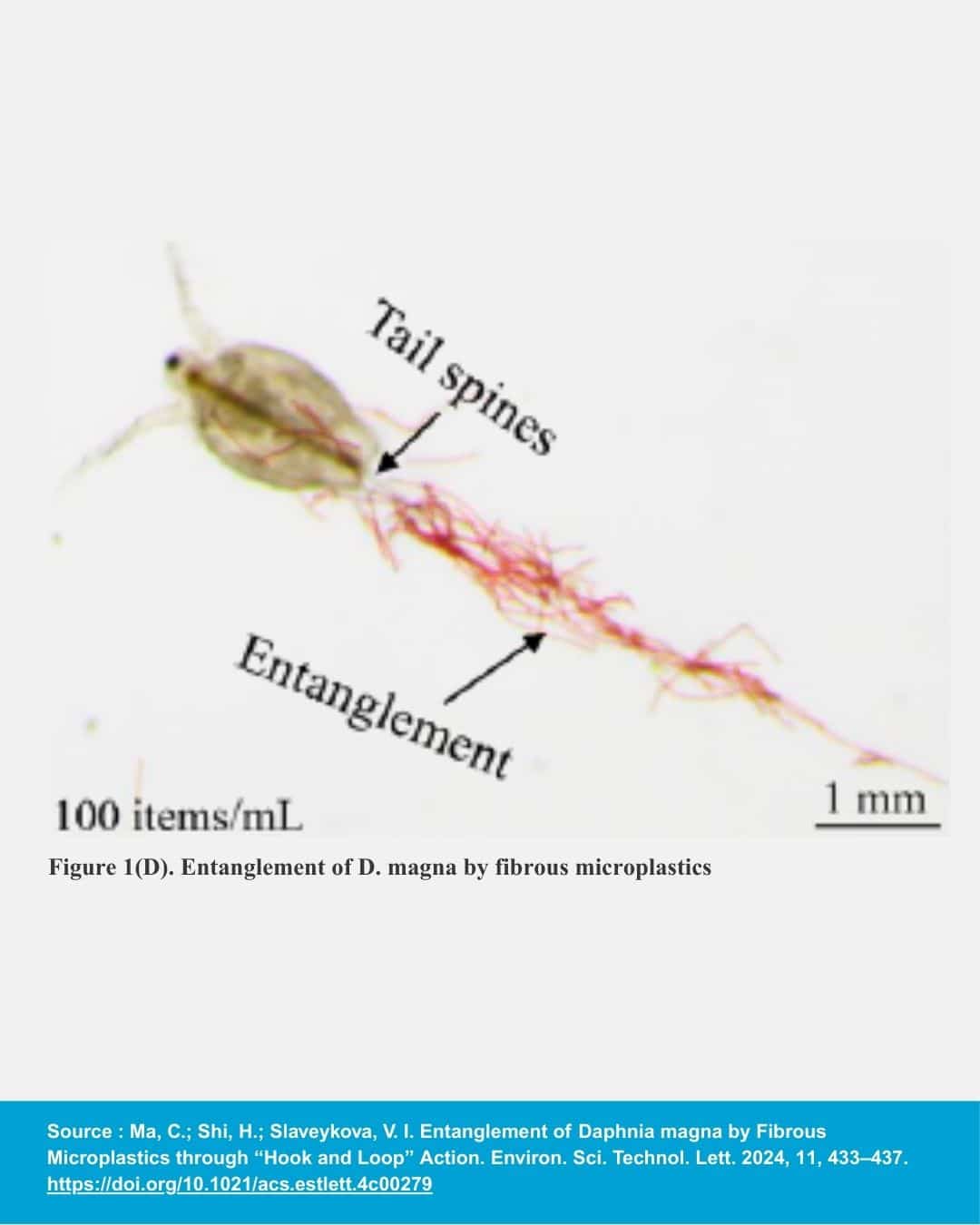
As well as their presence, their shape also raises questions. These microplastics from textiles have already been detected in our bodies, and a recent study by the University of Geneva² shows that these fibres can also become entangled in the bodies of certain species of zooplankton, disrupting their movements, causing physical damage and cellular stress, and reducing their overall chances of survival. These results underline the importance of considering the chemical and physical hazards of particles when assessing ecological risks.
In short, recycling plastic into clothing does not solve the problem; on the contrary, it increases the release of microplastics. Favouring clothes made from natural fibres is by far the best way of reducing the emission of synthetic fibres.
—————–
(1): A study carried out in collaboration with the University of Geneva, the ASL's «Pla'stock» study, proposed and supported by the International Commission for the Protection of the Waters of Lake Geneva (CIPEL) in response to its action plan, has made it possible to estimate the quantities of plastic present on the beaches of Lake Geneva in 2021 and 2022.
(2) Marelja, M.; Ma, C.; Ibelings, B. W.; Slaveykova, V. I. Species-specific impacts of fibrous microplastics on behavior, survival and oxidative stress in freshwater zooplankton. J. Hazard. Mater. 2026, 501, 140718