Stop Knotweed

Take concrete action against invasive alien species to promote biodiversity on the shores of Lake Geneva

active volunteers in 2025
0
of knotweed eliminated by 2025
0 kg
of land treated in 2025
0 m2


Since 2013, the ASL has been leading the project Stop knotweed, a major initiative to limit the spread of Asian knotweed on the shores of Lake Geneva. These invasive plants threaten native flora, accelerate bank erosion and disrupt the balance of aquatic environments.

Our goal is to sustainably restore the biodiversity of the shores of Lake Geneva through regular removal actions, ecological monitoring and public awareness.

PLEASE NOTE: for company initiatives (corporate volunteering, team building, etc.), please complete the form below. form for voluntary work.

Asian knotweeds, what are they actually?

Botanical information

Asian knotweed (Reynoutria japonica, Reynoutria sachalinensis, Reynoutria x bohemica) are invasive perennial herbaceous plant species of the Polygonaceae family native to East Asia, naturalised in Europe in a wide variety of damp habitats.

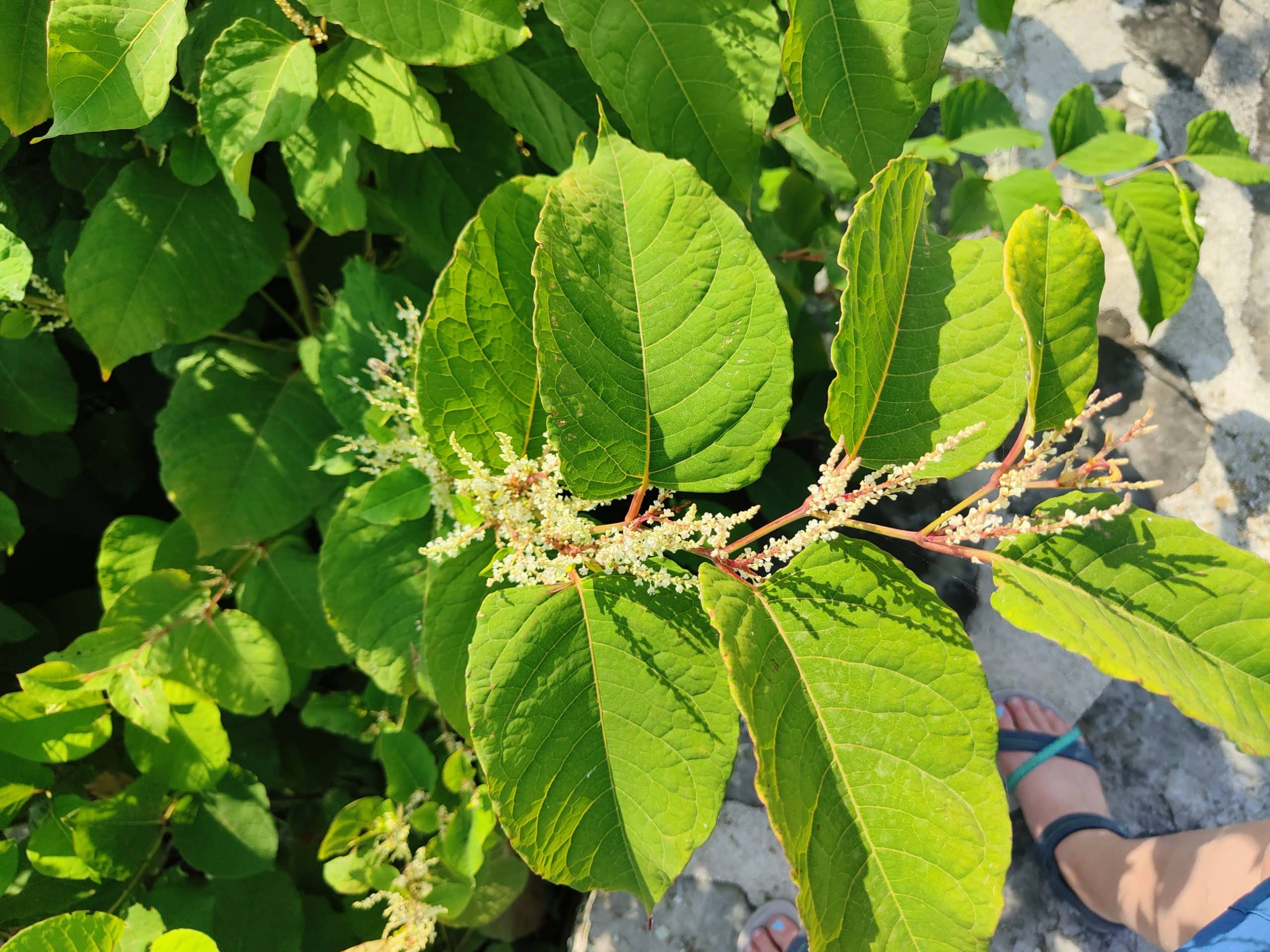
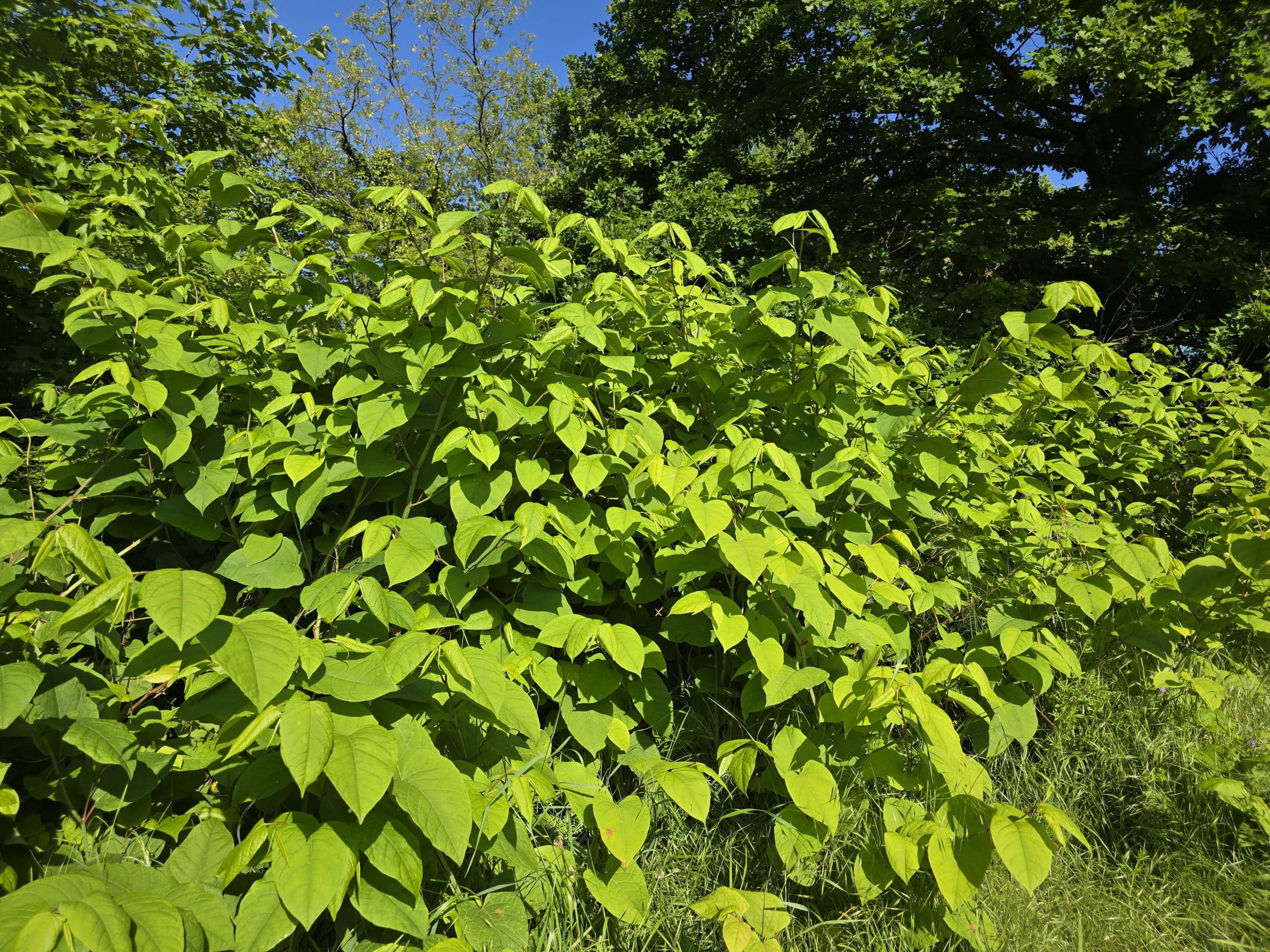
These vigorous plants have hollow and erect stems, often reddish, reminiscent of bamboo. The foliage, arranged alternately along the stem, consists of large, broadly oval to triangular leaves, measuring 15 to 20 cm long and abruptly truncated at the base.

Flowering occurs in summer with small white flowers grouped in panicles (large, branched and loose cluster inflorescences) in the leaf axils.

RhizomeIn our latitudes, Asian knotweeds have no natural predators capable of slowing their expansion. Their rapid growth, up to 8 centimetres a day to reach heights of up to 3 metres, enables them to form dense, single-species stands that choke native vegetation and deprive wildlife of diverse habitats.

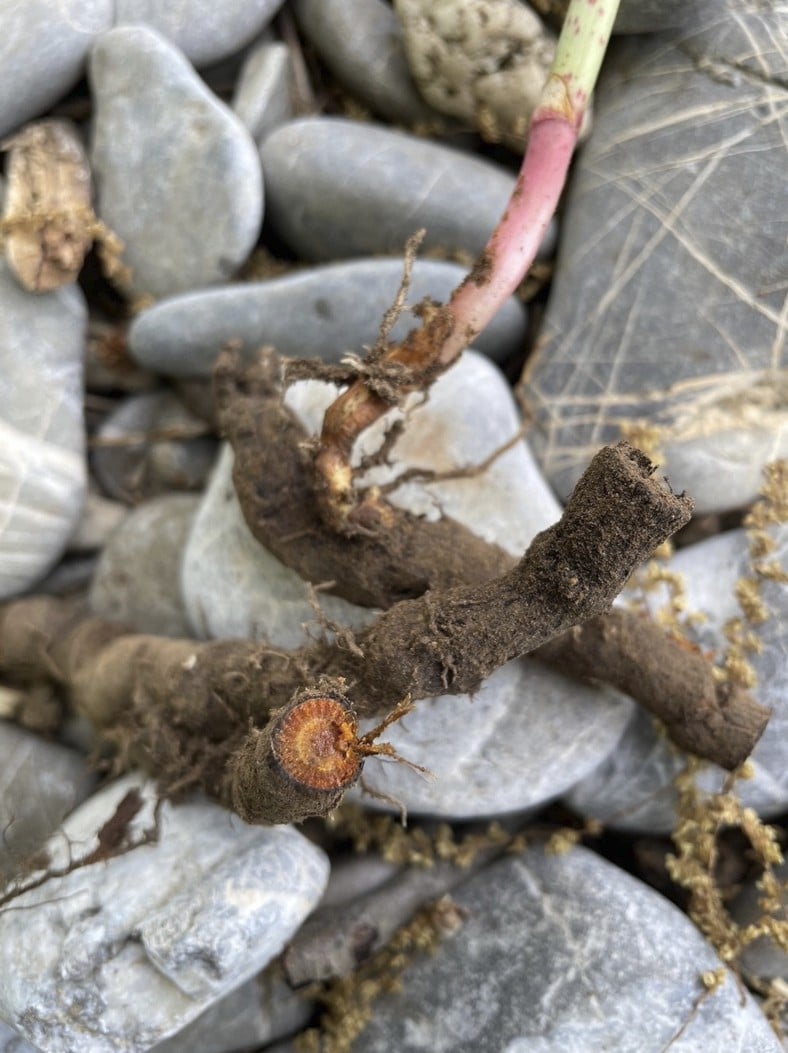
Their [leaves], from the end of winter, give them an advantage over local plants, whose light, water and nutrients they monopolise. Moreover, their powerful underground rhizomes plunge to depths of more than 2 metres, spread out in a wide network and release chemical substances that inhibit the growth of other plants.

A simple piece of stem or root, sometimes less than a centimetre in size, is enough to regenerate an entire plant. Transported by floods or earthmoving work, these fragments rapidly colonise new sites.

Besides their ecological impacts, knotweeds also pose a risk to infrastructure: their shallow root systems promote riverbank erosion, lift tarmac and can also damage certain structures.
In Switzerland, the fight against invasive alien plants is based on several federal texts, including the Federal Act on the Protection of Nature and Cultural Heritage (NCHA) and the Release into the Environment Ordinance (REO). Since September 2024, Asian knotweeds (Reynoutria japonica, Reynoutria sachalinensis, Reynoutria x bohemica appear in Schedule 2.1 of the Ordinance on the Protection against Dangerous Substances and Preparations, prohibiting their planting and direct use in the environment.

Active control nevertheless falls within the remit of the cantons: the Canton of Vaud, for example, has enshrined a control obligation in its implementing regulation (LPrPNP, art. 37), whereas in Geneva, this issue is integrated into the cantonal biodiversity strategy.

In France, the control of Asian knotweed is not subject to any national obligation. They do not appear on European or French lists of regulated species, but their management is based on Article Section L.411-3 of the Environmental Code, which enables local authorities to take local measures to prevent their spread.

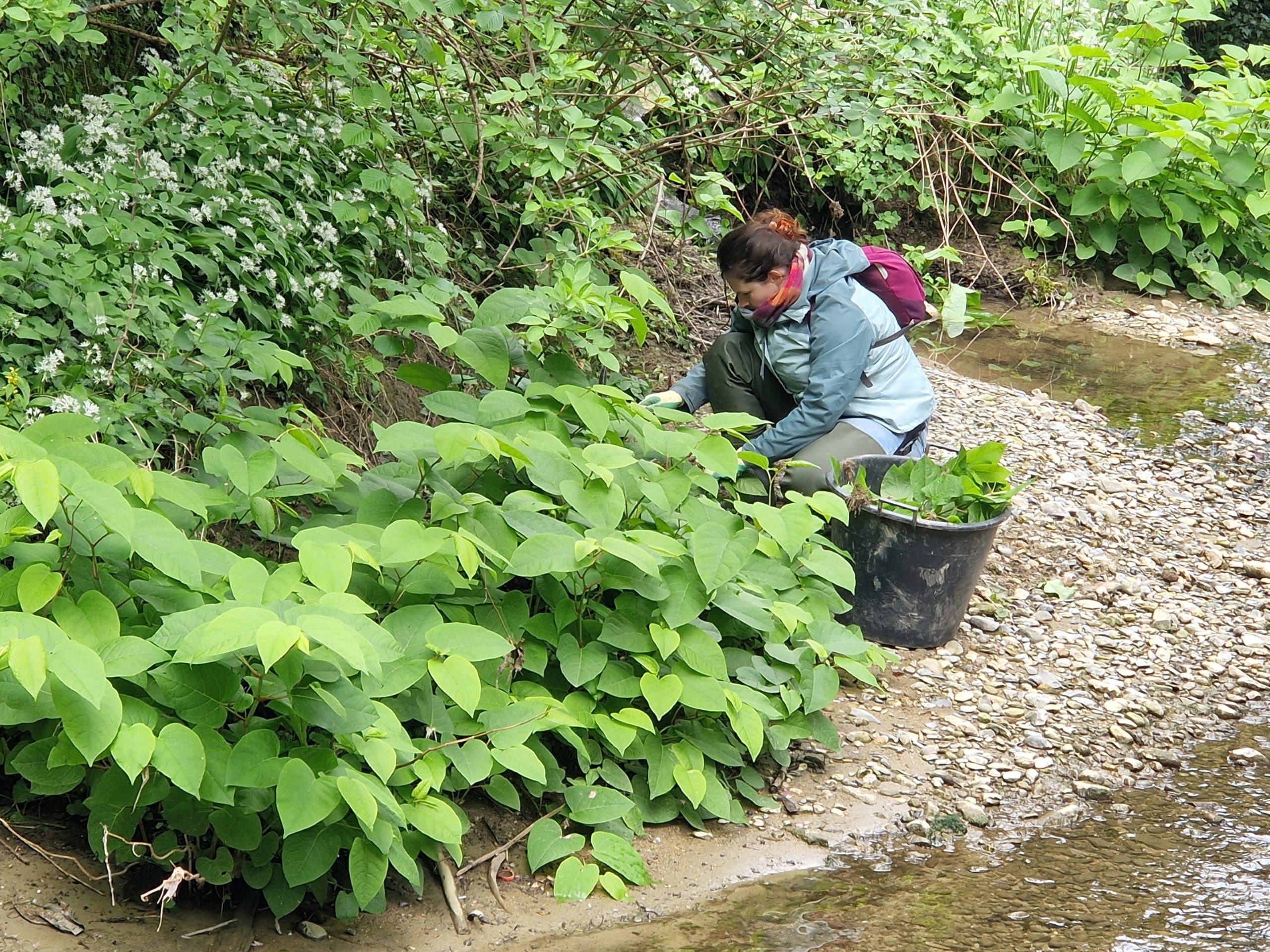
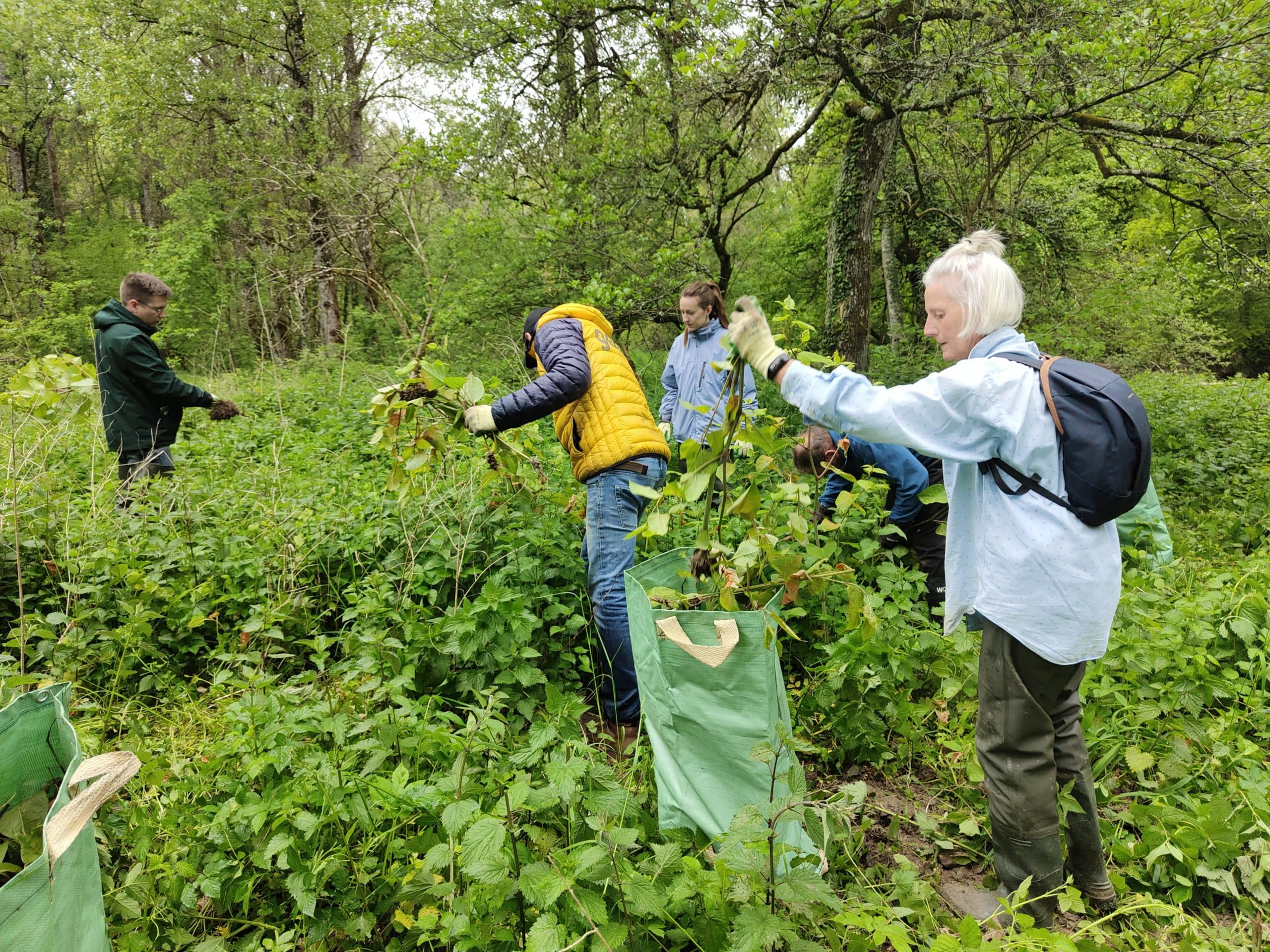
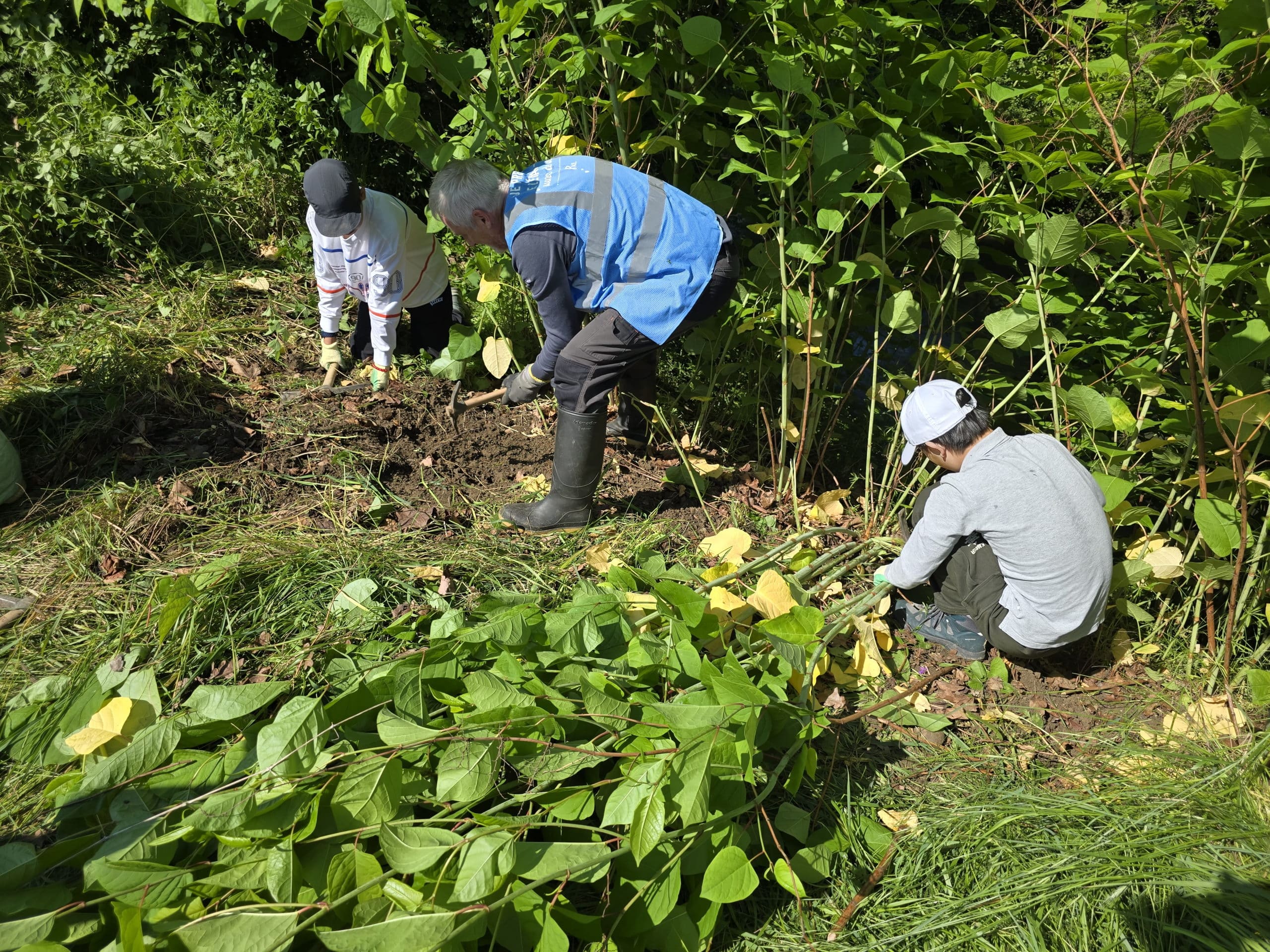
The fight against Asian knotweeds relies on a simple, effective and environmentally friendly method: regular manual pulling.

Between March and October each year, the treatments are repeated every 3 weeks in order to exhaust the rhizome reserves and prevent regrowth. This chemical-free approach also allows native plants to gradually recolonise the treated areas.

Since 2013, the ASL has been coordinating these actions on the shores of Lake Geneva, in collaboration with the municipalities, cantons, local associations and numerous trained volunteers. Thanks to this patient strategy, several heavily infested sites are now almost completely cleared of knotweed.

If you discover Japanese knotweed in your garden, do not mow it or cut it: this encourages its spread.

The most effective method for getting rid of it is to pull up the young stems by hand on a regular basis, several times a season, in order to exhaust the reserves of the rhizome.
All knotweed waste must be incinerated; never put it in the compost or green waste.

In case of doubt or a major infestation, contact your local authority or for tailored management advice.


Act with us!

Do you want to take practical action for nature?

Join the ASL in its fight against Japanese knotweed, a threat to the biodiversity of the shores of Lake Geneva.

This is a chance to spend some time in the open air, meet people and contribute directly to the protection of the lake.

Between April and October, we regularly organise pulling operations in the cantons of Vaud, Geneva, and in Haute-Savoie (F).

You will receive all the necessary information: locations, duration, equipment and tasks to be carried out.

No experience is necessary, all willing hands are welcome!

This action is supported by Federal Office for the Environment (FOEN)), from the cantons of Vaud and Geneva, and SIG Green Vital Electricity Fund and

In 2025, the Halte aux Renouées project was awarded the label Living With Rivers, which highlights local initiatives working for the preservation of rivers and aquatic environments.

The local health authority (ASL) also contributed to the Interreg cross-border project “Stop invasives”, from 2018 to 2022. The final report and its summary are available on the HEPIA website.

Drawing on its experience, the ASL also provides professional training, notably through courses SANU dedicated to the management of invasive alien plants, thereby reinforcing its role as a key player in the Lake Geneva region.

Media gallery

ASL newsletter sign-up

Stay informed about the news of the Association for the Protection of Lake Geneva – ASL by subscribing to our newsletter:
Your email address is used solely to send you our newsletter and information concerning our activities. You can at any time use the unsubscribe link included in each of our emails.
Setting course for 2026!✨❄️ May this New Year bring each and every one of us peace, inspiration and a great collective drive for Lake Geneva.

We look forward to seeing you in January to continue our work, share useful knowledge and work together to protect Lake Geneva. Your loyalty and commitment give our mission its full meaning, and we'd like to offer you our sincerest thanks.