The moon, obscured by the spotlights
The extent of artificial nighttime lighting is growing worldwide, as annual light emission has increased by 3 to 6% since the end of the 20th century.
Today, approximately 80 % percent of humans suffer from the effects of light pollution around the planet. Rivers, lakes, and coastlines are particularly exposed because this is where the majority of human habitat is concentrated.
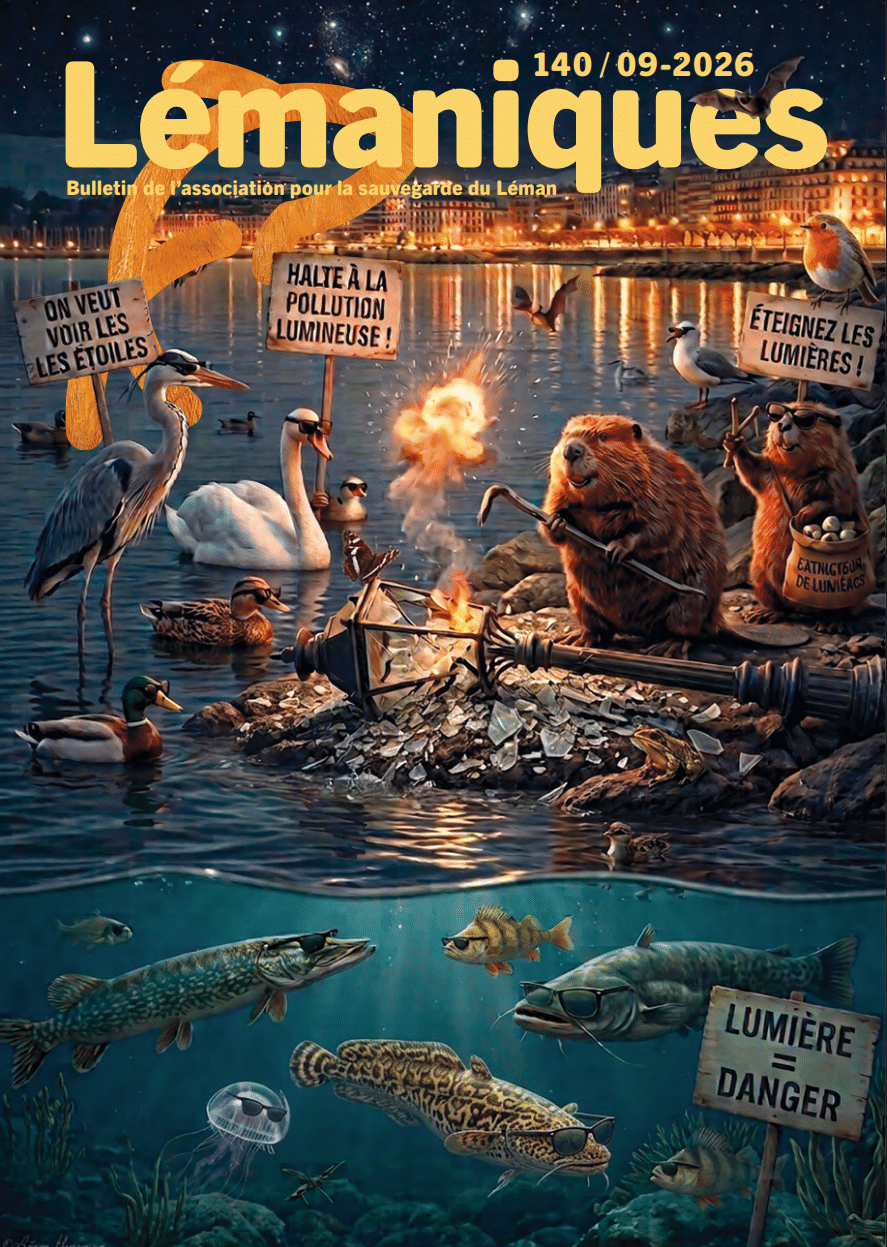
The wildlife that colonizes these areas is also largely affected by the high levels of artificial lighting that can produce a brightness up to 70 times stronger than the natural nocturnal light source: the moon!
The littoral fringe of the Lake Léman is home to a very rich biodiversity, mixing species from the water and the land. It also constitutes a privileged territorial space for our leisure activities and our travels (including at night), and, of course, includes very attractive urban areas. This appeal has notably favored a spectacular multiplication of public or private light points along the 167 km of banks and an increase in light pollution.
[…]